


15 Types of Scaffolds for Construction and Maintenance Work

Scaffold types split into two main categories: mobile scaffold towers you can hire and assemble yourself, and erected scaffold systems that require professional installation by scaffolders. Most DIY projects and small jobs use mobile towers, while larger projects like full house renovations need erected scaffold with professional setup.
Mobile scaffold towers come in different types designed for specific situations. Standard aluminium towers work for general use, while GRP fibreglass towers handle electrical work safely. Stair towers adjust to uneven ground, and compact models fit tight indoor spaces. Erected scaffold types include independent tied scaffold for whole-house coverage, birdcage scaffold for large interiors, and cantilever systems for hard-to-reach areas.
This guide covers every scaffold type you’ll encounter, explains when to use each one, and helps you match the right type to your specific job. Mobile scaffold towers are available for hire, while erected scaffold types require professional scaffolders for installation and dismantling.
Mobile Scaffold Tower Types Available for Hire
Mobile scaffold towers are freestanding structures you can hire, assemble yourself, and move around as needed. These towers suit most residential and light commercial work where you need temporary height access.
Standard Aluminium Scaffold Tower
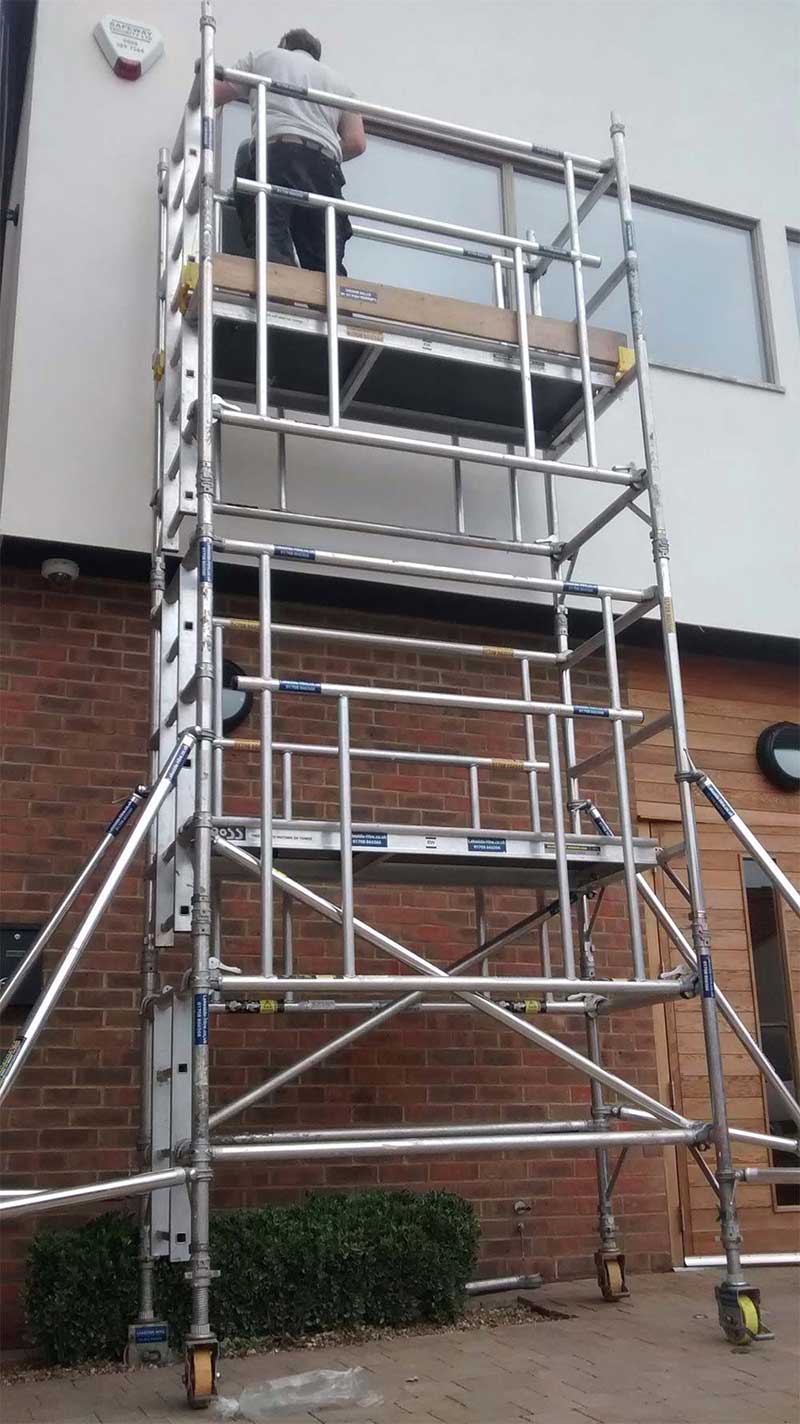
Used for: General painting, gutter cleaning, window installation, bricklaying, and maintenance work on residential and commercial properties.
Standard scaffold towers are the most versatile for everyday construction and maintenance tasks. These lightweight towers assemble quickly using prefabricated frame sections that stack vertically and connect with horizontal braces.
Key specifications:
• Working heights from 2m for indoor ceiling work up to 12m for three-storey buildings
• Suitable for one or two workers with tools
• Light enough to move by hand between positions
• Aluminium construction resists corrosion for indoor and outdoor use
• Adjustable legs compensate for slight ground variations
• Guardrails and toe boards provide fall protection at height
• Available for hire with weekly rates starting from £33
You’ll see these towers on virtually every type of residential project. They’re the default choice when you need safe working height without the complexity or cost of erected scaffold systems. Most hire companies stock these in multiple heights to suit different job requirements.
GRP Fibreglass Scaffold Tower

Used for: Electrical work near power lines, telecom installations, work on properties with overhead cables, and any situation requiring non-conductive equipment.
GRP scaffold towers are made from glass-reinforced plastic instead of metal. This material doesn’t conduct electricity, making these towers essential when working near power lines or electrical installations according to UK Work at Height Regulations.
Key specifications:
• Working heights typically range from 6m to 10m
• Non-conductive fibreglass construction prevents electrical current transfer
• Function identically to aluminium versions but weigh more
• Cost premium of about 40-50% over aluminium towers
• Resist chemical corrosion better than metal towers
• Required by law when working within 3 metres of overhead power lines
• Available for hire where electrical safety compliance is mandatory
Electricians, telecom engineers, and anyone working on properties with overhead cables need GRP towers. The fibreglass construction prevents electrical current from passing through the structure if contact occurs with live wires. You’ll pay extra for this safety feature, but it’s non-negotiable near electrical hazards.
Alloy Stair Scaffold Tower

Used for: Stairwell decorating, electrical work on stairs, painting sloped driveways, maintenance on uneven ground, and any work requiring stable platforms on stepped surfaces.
Stair scaffold towers feature independently adjustable legs that handle stairs, slopes, and uneven ground. Each leg extends or retracts separately to level the platform on surfaces where standard towers can’t sit flat.
Key specifications:
• Working heights range from 4m to 8m
• Each leg adjusts independently for uneven surfaces
• Bubble levels included to ensure platform sits horizontal
• Maintains stability even when individual legs sit at different heights
• Setup takes slightly longer than standard towers
• Adjustable mechanism adds weight compared to fixed-leg towers
• Available for hire at premium over standard towers
These towers solve the common problem of working on staircases or sloped driveways. Painters decorating stairwells, electricians installing staircase lighting, and anyone needing access on multi-level surfaces use stair towers. The adjustable leg system is the only safe way to work on stepped surfaces.
Room Mate Folding Scaffold Tower
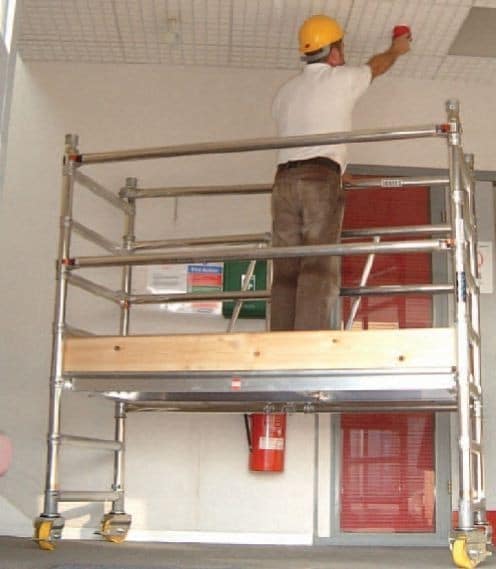
Used for: Indoor painting in confined rooms, bedroom ceiling work, installing ceiling lights, cupboard repairs, and any indoor task in tight spaces.
Room Mate scaffold towers have a compact footprint designed specifically for indoor work where larger towers won’t fit. These towers fold for transport and storage, then expand to provide working height in rooms where space is limited.
Key specifications:
• Narrow base typically 0.7m x 1.8m fits through standard doorways
• Working heights range from 4m to 6m
• Folding design allows storage in cupboards or vehicle boots
• Smaller working platform limits material storage at height
• Guardrails and toe boards included despite compact size
• Lighter weight than standard towers for easy handling
• Popular hire option for DIY enthusiasts and small contractors
The compact size makes these ideal for painting bedrooms, installing ceiling lights, or any indoor task requiring height access in limited space. Despite the smaller footprint, these towers still provide safe working platforms with proper fall protection.
Cantilever Scaffold Tower

Used for: Working over conservatories, painting above porches, window cleaning over extensions, and accessing areas blocked by ground obstacles.
Cantilever scaffold towers feature extended platforms that reach beyond the tower’s base. This design lets you work over obstacles like conservatories or parked vehicles without repositioning the base.
Key specifications:
• Working heights range from 6m to 10m
• Platform extensions typically reach 1-2m beyond tower base
• Cantilevered design requires counterweights or wider bases for stability
• Setup demands careful attention to weight distribution
• Must follow manufacturer specifications for maximum extension distances
• Higher hire cost due to specialist engineering requirements
• Available where standard tower placement is impossible
The extended platform cantilevers out from the main tower structure, giving you access to areas that would otherwise require the tower to sit in an impossible location. Window cleaners working over conservatories and painters reaching eaves above extensions use cantilever towers regularly.
Mi Tower Scaffold
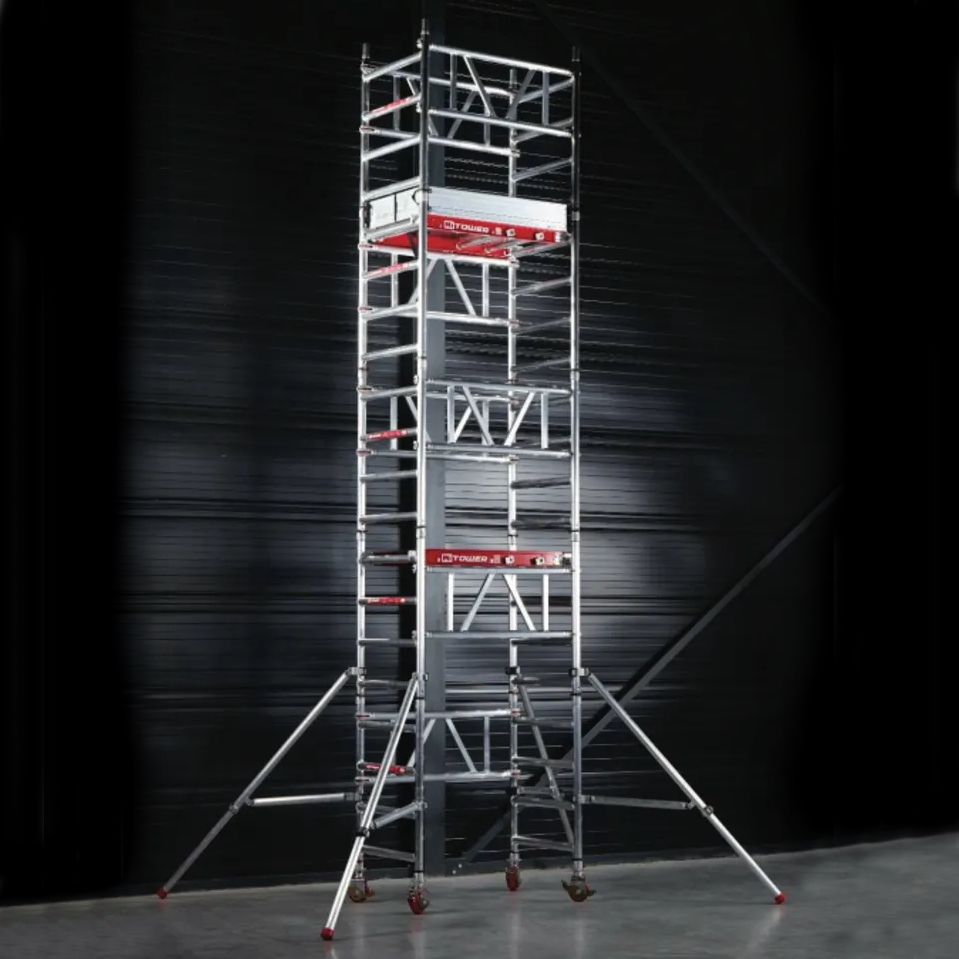
Used for: Multi-room ceiling painting, light fixture installation across large buildings, frequent repositioning tasks, and jobs requiring regular tower movement.
Mi Towers are compact, portable towers designed for frequent repositioning. These towers prioritize ease of assembly and transport over maximum height capability.
Key specifications:
• Working heights range from 4m to 6m
• Lightweight construction for easy movement
• Simplified assembly reduces setup time
• Quick to set up, work, dismantle, and move
• Smaller working platform area than standard towers
• Reduced height capacity compared to standard aluminium towers
• Available for hire where portability matters more than height
The quick-assembly design suits jobs where you need to move the tower multiple times throughout the day. Ceiling painters working through multiple rooms and electricians installing fixtures across large buildings benefit from Mi Tower portability. The trade-off for easy movement is less height and working space.
Erected Scaffold Types Requiring Professional Installation
Erected scaffold systems involve professional installation by trained scaffolders who build pole-and-board structures that attach to or surround buildings. These systems handle larger projects where mobile towers can’t provide sufficient coverage or reach.
Independent Tied Scaffold
Used for: Full house exterior work including roof replacement, complete repointing, whole-house painting, major renovations, and any project requiring multi-level access around entire building perimetres.
Independent tied scaffold consists of two rows of vertical poles (standards) connected by horizontal ledgers and diagonal braces, with the structure tied to the building at regular intervals according to BS EN 12811 standards. This creates a freestanding scaffold that runs parallel to the building face.
Key specifications:
• Two-row design provides stability without relying on building structure
• Working platforms sit at multiple levels simultaneously
• Professional scaffolders required for erection and dismantling
• Setup takes a full day for typical two-storey houses
• Remains in place for weeks or months depending on project duration
• Individual poles, couplers, and boards create custom configurations
• Monthly hire rates from £650 to £1,500 for two-storey houses
This scaffold type handles the heaviest construction work. The two-row design gives tradespeople access to different heights simultaneously, meaning roofers can work at the top while painters work lower down without interference. Professional scaffolders build these systems to exact specifications for each building.
Putlog Scaffold
Used for: New brickwork construction, blockwork building, and situations where scaffold must integrate with masonry as work progresses.
Putlog scaffold uses a single row of standards with horizontal putlogs that insert into the building’s masonry joints during construction. This design only works on new brickwork or blockwork where you can build the putlog ends into the mortar joints.
Key specifications:
• Single-row design uses roughly half the materials of independent scaffold
• Putlog ends embed in mortar joints as bricklaying progresses
• Only suitable during new construction, not on existing buildings
• Doesn’t obstruct bricklayer access to wall face
• Putlog holes remain visible in mortar joints after removal
• Less expensive than independent scaffold due to reduced materials
• Requires professional scaffolders for safe installation
Bricklayers prefer this scaffold type because it doesn’t block their access to the wall face. As they lay each course of bricks, they embed the putlog ends in the mortar joints, creating support points for the working platform. Modern construction increasingly uses independent scaffold even for new brickwork because it offers more flexibility.
Birdcage Scaffold
Used for: Church ceiling restoration, theatre maintenance, museum conservation, large commercial ceiling work, and any project requiring wide-area interior access at height.
Birdcage scaffold creates a grid of vertical standards across a large area, all supporting a single working platform. Looking from above, the regular pattern of standards resembles a birdcage structure.
Key specifications:
• Standards placed in grid pattern typically 2-3m spacing
• Horizontal ledgers connect in both directions
• Boards laid across top create continuous working platform
• Ground beneath remains accessible due to minimal standard footprint
• Supports heavier loads than mobile towers through weight distribution
• Multiple standards provide stable support without relying on walls
• Professional scaffolders required for installation in large spaces
This scaffold type suits large interior spaces like church halls, museums, theatres, and commercial buildings where you need ceiling access across wide areas. Plasterers, electricians, and decorators working on large ceilings use birdcage scaffold. The ground stays usable because the standards occupy minimal floor space.
Slung Scaffold
Used for: Theatre lighting rig maintenance, factory production floor work, heritage building conservation, and situations where ground contact must be avoided entirely.
Slung scaffold suspends the working platform from roof structures or upper floors using wire ropes or chains. The platform hangs in position rather than standing on the ground.
Key specifications:
• Suspended from roof structures using wire ropes or chains
• Platform remains static once hung
• Some designs allow vertical adjustment
• Engineers must calculate suspension points for load capacity
• Roof access required for securing suspension points
• Ground space remains completely clear during use
• Specialist scaffold type with higher costs than ground-based systems
This type works in buildings where ground space must stay completely clear. Theatres maintaining lighting rigs, factories with production floors that can’t be obstructed, and heritage buildings where ground contact damages historic features use slung scaffold. You’ll rarely encounter this in residential work.
Suspended Scaffold
Used for: High-rise window cleaning, skyscraper maintenance, bridge inspection, tower block repairs, and any work on extremely tall structures where ground-based access is impractical.
Suspended scaffold hangs from the top of buildings on cables or ropes, with platforms that can be raised and lowered as needed. High-rise window cleaners and building maintenance teams use these systems daily.
Key specifications:
- Common types include swing stages and single-point suspension systems
- Electric or manual winches control platform height
- Safety harnesses attached to independent lifelines mandatory
- Many modern high-rises have permanent suspended scaffold installations
- Reaches heights that ground-based systems can’t match economically
- Not available for hire as temporary equipment
- Strict safety regulations due to obvious fall risks
A 20-storey building would need impractically tall erected scaffold, but suspended systems access any height from above. These are permanent building features rather than hire items. Workers must use safety equipment meeting fall protection regulations separate from the platform support.
Cantilever Scaffold
Used for: Urban street frontages, sites with water features at ground level, busy pedestrian areas, and locations where ground obstacles prevent normal scaffold placement.
Cantilever scaffold projects outward from a building without ground support underneath the working area. Beams called needles anchor into the building structure or a ground-based tower, with the working platform extending beyond.
Key specifications:
• Cantilevered sections extend several metres from support points
• Beams (needles) anchor into building structure
• Engineers calculate loads to prevent tipping
• Counterweights or ties secure cantilever against movement
• Structural assessment required for anchor point capacity
• Specialist engineering adds cost versus standard erected scaffold
• Professional scaffolders essential for safe installation
This type solves access problems where ground obstacles prevent normal scaffold placement. You’ll see cantilever scaffold on urban construction sites where pavements must remain accessible or where ground-level businesses can’t be obstructed. Setup requires careful engineering to ensure buildings can handle the loads.
Specialist Scaffold Accessories and Systems
Some scaffold components solve specific access problems by working with standard towers or erected systems to create custom solutions.
Bridge Beams for Spanning Gaps
Used for: Working over conservatories, accessing buildings with rear extensions, painting over driveways, and creating platforms across obstacles.
Bridge beams span between two scaffold towers or between a tower and a building, creating working platforms over obstacles. These beams let you work over conservatories or extensions without building scaffold from the ground up.
Key specifications:
• Beam lengths range from 2.5m to 6m
• Engineered aluminum or steel members rated for specific loads
• Set up towers on either side then lay beams across
• Costs less than cantilever towers in some situations
• Provides more working space than cantilever designs
• Cannot use random planks as bridge beams due to safety requirements
• Available for hire where obstacles block standard tower placement
Roofers accessing buildings with rear extensions and decorators painting over conservatories use bridge beam systems. This approach gives you safe access over gaps without the expense of full cantilever systems.
High Clearance Towers
Used for: Maintenance over production lines, access above parked vehicles, work over fixed ground obstacles, and situations requiring clearance underneath the platform.
High clearance towers have their first working platform positioned higher than standard towers, creating clearance underneath. This design lets you work over vehicles, machinery, or other ground-level obstacles.
Key specifications:
• First platform sits 2-3m up instead of standard intervals
• Same working heights as standard models
• Vehicles or equipment can pass underneath during work
• Access via integrated ladder to elevated first platform
• Wider bases required for stability due to higher center of gravity
• Bulkier than standard types
• Available for hire where ground obstacles can’t be moved
The elevated first platform means you can drive vehicles or position equipment underneath while still accessing working height above. Maintenance work over production lines and access over parked vehicles benefit from high clearance designs.
Lift Shaft Towers
Used for: Elevator installation, service shaft access, confined vertical space maintenance, and work in areas where standard tower dimensions won’t fit.
Lift shaft towers have narrow footprints designed to fit inside elevator shafts and confined vertical spaces. Standard towers won’t fit in these tight areas.
Key specifications:
• Reduced base dimensions often as narrow as 0.6m x 0.6m
• Working heights reach 6-8m despite narrow base
• Smaller working platforms than standard towers
• Lower load capacities due to reduced footprint
• Higher hire cost due to limited availability
• Specialized design for confined spaces only
• Available when standard tower dimensions physically won’t fit
Builders installing lifts, electricians working in service shafts, and maintenance teams accessing confined vertical spaces use lift shaft towers. You’ll only need these specialist towers when standard dimensions make access impossible.
System Scaffold vs Traditional Tube and Fitting
Erected scaffold splits into two construction methods that scaffolders use: system scaffold and traditional tube and fitting.
System scaffold uses prefabricated components with integrated connection points. Types include Ringlock, Cuplock, and Kwikstage systems. These connect using rosettes, cups, or clips rather than separate couplers.
Key features:
• Faster assembly than tube and fitting
• Connections built into components
• Fewer loose parts reduces missing fittings
• Standardized components simplify planning
• Dominates modern construction due to time savings
• Most scaffolders use system types for standard shapes
Tube and fitting scaffold uses plain tubes and separate couplers to create structures. Right-angle couplers connect perpendicular tubes while swivel couplers handle diagonal bracing.
Key features:
• Ultimate flexibility for complex shapes
• Connect tubes at any angle and position
• Assembly takes longer due to individual couplers
• More loose parts increases potential for missing components
• Benefits curved facades and irregular structures
• Still appears on sites with challenging geometries
For most residential projects, you won’t specify system type versus tube and fitting. Your scaffolder chooses based on the building shape and their equipment inventory. Both methods meet the same safety standards when properly installed.
Frequently Asked Questions About Scaffold Types
What’s the most common scaffold type for home use?
Standard aluminium scaffold towers are the most common for residential DIY work. They handle 90% of typical jobs including gutter cleaning, exterior painting, window installation, and general maintenance. Working heights from 4m to 8m cover most two-storey house requirements. These towers are available for hire with weekly rates starting from £33.
When do I need professional erected scaffold instead of a tower?
Use erected scaffold when you need access to entire house perimetres, when projects last several weeks or months, when multiple trades need simultaneous access at different levels, or when working above 8-10m height. Full roof replacements, complete exterior renovations, and major construction all require erected scaffold installed by professional scaffolders.
Can I use aluminium towers near electrical work?
No. You must use GRP fibreglass towers when working near power lines or electrical installations. Aluminium conducts electricity and creates serious shock risks if contact occurs with live wires. GRP towers cost more but provide essential electrical safety required by UK regulations.
What’s the difference between Ringlock, Cuplock, and Kwikstage systems?
These are different system scaffold types with varying connection methods. Ringlock uses rosettes allowing 8-direction connections. Cuplock features fixed lower cups and drop-over upper cups allowing 4-direction connections. Kwikstage uses V-shaped clips in a star pattern. All function similarly for end users, with differences mainly affecting erection speed for scaffolders.
Which scaffold type is cheapest to hire?
Standard aluminium towers are cheapest for DIY projects at £33-£174 per week depending on height. For erected scaffold, costs depend on coverage area rather than scaffold type, with two-storey semi-detached houses averaging £650-£1,100 monthly regardless of whether scaffolders use Ringlock, Cuplock, or tube and fitting construction.
How do I know what working height I need?
Measure from ground to the area you’re working on, then add 2m for comfortable reaching above the platform. A 5m high gutter needs approximately 7m working height tower. Our scaffold tower sizing guide provides detailed measurement instructions for different scenarios.
Conclusion
Scaffold types range from simple mobile towers you can hire and assemble yourself to complex erected systems requiring professional scaffolders for installation. Most residential projects use standard aluminium towers for their versatility and ease of use, while specialist situations call for GRP towers near electrical work, stair towers on uneven ground, or compact Room Mate towers in confined spaces.
Larger projects need erected scaffold with professional installation by trained scaffolders. Independent tied scaffold handles full house exterior work, birdcage systems provide wide-area interior access, and cantilever or suspended types solve complex access challenges.
Choosing the right scaffold type depends on your project scope, site conditions, and safety requirements. Mobile towers suit most DIY and small contractor jobs and are available for hire, while whole-house renovations and major construction demand professionally erected systems.
Lakeside Hire stocks Boss aluminium towers, GRP fibreglass towers, stair towers, and specialist equipment across the UK. We deliver to Manchester, Birmingham, Leeds, Liverpool, Bristol, Nottingham, and Leicester with next-day service.
Call 01708 866566 for guidance on which scaffold type suits your specific project requirements.


