



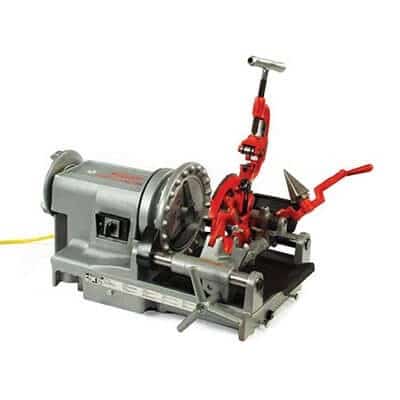
An electric pipe threader does one job: it cuts clean, consistent threads onto steel pipe. If you need to make threaded connections on site — for pipework, plumbing, or rigid metal conduit — hiring a pipe threading machine makes more sense than owning one for most projects.
We hire electric pipe threaders suitable for professional trade use, with nationwide delivery often available next day. The equipment arrives ready to work, with die heads and cutting oil included. You thread your pipe, return the machine, and move on.
What You’re Hiring
Electric pipe threader hire typically covers two formats, depending on model availability:
Stand-mounted pipe threaders are workshop-style threading machines on a stand or tripod. They’re more rigid, more stable, and better suited to threading larger volumes of pipe. Most use a foot pedal for hands-free control. If you’re working from a site compound or dedicated area, this is usually the more efficient setup.
Portable pipe threaders (electric die stocks) are compact handheld machines designed for threading pipe already in position. They’re lighter, easier to move around, and practical for work in risers, ceiling voids, plant rooms, or anywhere access is tight. Plumbers, maintenance teams, and electricians working with conduit tend to favour this format for its portability.
Both types of pipe threading equipment produce the same result: a clean, standards-compliant thread ready for fittings, couplings, and connectors. The difference is workflow, not quality.
How It Works
The die head of an electric pipe threader rotates around the pipe, cutting threads as it moves along the length. Many machines also handle cutting and reaming operations — preparing the pipe end before threading. The process is straightforward: secure the pipe, apply cutting oil, and let the machine do the work.
Die heads must match the pipe diameter you’re working with. Using the wrong size produces unusable threads. That’s why hire includes a full set of common sizes — you’ll have the right die for the job.
What It Threads
Electric pipe threaders handle a range of materials commonly used in plumbing and building environments:
- Mild steel and black steel pipe
- Galvanised steel pipe
- Rigid metal conduit (for electricians)
What about copper? Copper pipe isn’t threaded — it uses compression fittings, solder joints, or press-fit connectors. A pipe threader won’t help you there.
Most hire machines cover a size range up to 2″ (50mm) diameter. The full range of common die sizes — ½”, ¾”, 1″, 1¼”, 1½”, and 2″ — is typically included. If you need larger capacity for bigger pipework, let us know — larger machines exist but are hired separately.
Thread Standards
UK mechanical pipework typically requires BSPT threads (tapered, per EN 10226). That’s the default assumption for pipe threading equipment hired in the UK.
Other standards — BSPP (parallel) or NPT (American tapered) — are possible with different dies and attachments. If your job specifies something other than BSPT, mention it when booking so we can confirm the model and tooling will match your requirements.
What’s Included
Pipe threader hire from Lakeside includes:
- Electric pipe threading machine (110V)
- Die head attachments in standard sizes
- Cutting oil
- Pipe vice or clamp (stand-mounted models)
- Carry case or transport protection (portable models)
The equipment arrives ready to use. Plug in, secure your pipe, apply oil, and start threading. No chasing missing parts or hunting for accessories.
Why Hire Instead of Buy?
An electric pipe threader is specialist trade equipment. Unless you’re threading pipe every week, owning one means paying for a machine that sits in storage between jobs — plus ongoing maintenance, calibration, and the hassle of transporting it yourself.
Hiring makes sense when:
- You need pipe threading for a specific project, not ongoing work
- You want access to maintained, ready-to-use equipment without the upfront cost
- You’d rather avoid the storage, maintenance, and transport headaches
For most tradespeople — plumbers, pipefitters, electricians, mechanical installers — hiring a pipe threader for the job is the practical choice. Use it, return it, done.
Using It Properly
Electric pipe threaders are straightforward to operate, but a few basics matter:
Secure the pipe. The pipe must be held firmly in a vice or clamp. Unsecured pipe will rotate with the dies — bad for the thread, worse for your hands.
Use cutting oil. Threading generates heat and friction. Cutting oil keeps the dies cool, produces cleaner threads, and extends tool life. Don’t skip it.
Eye protection and gloves. Swarf and oil are part of the process. Dress accordingly.
Hands clear of rotating parts. Stand-mounted machines use foot pedals for a reason — keep your hands well away from the die head while it’s spinning.
No formal certification is required to operate a pipe threader, but competence matters. If you haven’t used one before, take a few minutes to familiarise yourself with the controls and safety features before starting work.
Delivery
Pipe threading machines — especially stand-mounted models — can be heavy and awkward. Delivery is usually the sensible option for trade users who’d rather spend time on the job than wrestling equipment into a van.
We deliver pipe threaders nationwide, with next-day delivery often available. The equipment arrives ready to use, and we’ll collect it when you’re done. If you’re planning to collect yourself, check the weight and dimensions first — not all models fit comfortably in an estate car.
Pricing
| Hire Period | Price (excl. VAT) |
|---|---|
| 1 Week | £99.00 |
| 2 Weeks | £198.00 |
| 3+ Weeks | £356.40 (£89.10/week) |
Delivery: £15 each way. Free delivery on hires of 3 weeks or more.
Contact us for a quote or to check availability for your project.
FAQs
What size range of pipe can I thread? Most electric pipe threaders we hire cover pipe up to 2″ (50mm). The full range of standard die sizes — ½”, ¾”, 1″, 1¼”, 1½”, and 2″ — is typically included.
What thread standard does it cut? BSPT (tapered) is the UK default for mechanical pipework. Other standards like BSPP or NPT are possible with different die attachments — mention your requirements when booking.
Is cutting oil included? Yes. The equipment arrives ready to use with cutting oil and all necessary attachments.
Can I thread copper pipe? No. Copper pipe uses compression fittings, solder, or press-fit connectors — not threads. Pipe threaders are for steel pipe and rigid conduit.
Can I thread rigid metal conduit? Yes. Electric pipe threaders work on rigid metal conduit as well as steel pipe — useful for electricians working in commercial or industrial environments.
Do I need training? No formal certification is required. The machines are straightforward to operate, but you should be competent with the equipment and familiar with safe working practices.
Should I collect or get delivery? Delivery is usually easier. Stand-mounted pipe threaders are heavy and awkward to transport. Portable models are more manageable, but check dimensions before assuming they’ll fit your vehicle. Next-day delivery is often available.
What’s the difference between stand and portable models? Stand-mounted pipe threaders are more stable and efficient for volume threading work. Portable pipe threaders (electric die stocks) are compact and designed for threading pipe in position. Both produce the same quality thread — the choice depends on your working environment.
What maintenance is done before hire? Every pipe threader is checked, cleaned, and tested before it leaves our depot. Dies are inspected, oil is topped up, and the machine is confirmed ready for trade use.
Do the die heads need to match my pipe size? Yes. Die heads must correspond to the pipe diameter you’re threading. Hire includes a full set of common sizes (½” to 2″), so you’ll have the right die for standard pipework.