




Best Scaffold Towers to Hire for Suspended Ceiling Installation
Suspended ceiling installation demands more from your access equipment than most ceiling jobs. You work at the same height across a large horizontal area, repositioning constantly as you fix grid runners, drop tiles into place, and run cable trays overhead. The wrong tower slows you down, creates safety risks, and turns a straightforward job into a frustrating one.
This guide covers the best scaffold towers to hire for suspended ceiling work, what height to specify, and how to work efficiently across different ceiling types and spaces.
What Makes Suspended Ceiling Work Different?
Most working at height tasks involve reaching a fixed point and staying there. Suspended ceiling installation is different. You move laterally across the entire ceiling plane, fixing main runners at regular intervals, clipping in cross tees, and dropping acoustic or fire-rated tiles into each bay.
That repositioning requirement changes everything about tower selection. You need a tower with lockable castors that moves without dismantling. You need a platform wide enough to hold ceiling tiles alongside you. You need something lightweight enough to manoeuvre through a commercial space without damaging finished flooring.
Ceiling heights also vary significantly. Domestic suspended ceilings typically sit around 2.4m. Commercial offices run 3-4m. Warehouses and industrial units can reach 6m or higher. Getting the right size scaffold tower before you start matters more than most people realise.
Best Scaffold Towers to Hire for Suspended Ceiling Work
| Tower | Ceiling Height Suited | Crew Size | SWL | Best For |
|---|---|---|---|---|
| Mi Tower | Up to 4m | Solo | 150kg | Domestic ceilings, small offices, fast solo repositioning |
| Room Mate Folding Tower | Up to 4m | Solo | 150kg | Confined rooms, retail fit-outs, doorway access |
| Narrow Scaffold Tower | Up to 4m | Solo | 150kg | Corridors under 1.2m wide, stairwell landings |
| AGR Tower | 3-5m | Two-person | 275kg | Open-plan offices, large floor plates, high-volume installs |
| High Clearance Tower | 6m+ | Two-person | 275kg | Warehouses, industrial units, sites needing base clearance |
Mi Tower: Best for Solo Operators on Standard Ceilings

The Mi Tower suits solo ceiling fitters working on domestic suspended ceilings and small commercial spaces. It builds without a second person using a simple clip-frame system, repositions quickly on lockable castors, and passes through standard UK doorways without dismantling.
Mi Tower hire works well for ceiling heights up to 4m. The compact platform keeps the tower light and manoeuvrable. For a solo fitter working through a domestic basement conversion or small office ceiling, it provides the fastest repositioning of any tower in the range. You move it, lock the castors, step up, and continue the grid run without breaking rhythm.
Best for: Domestic suspended ceilings, small offices, solo ceiling fitters working at heights up to 4m.
Room Mate Folding Tower: Best for Tight Indoor Spaces

The Room Mate is the right choice when space is genuinely tight. It folds to pass through standard doorways, sets up quickly, and works across confined rooms where a standard tower frame won’t fit without awkward manoeuvring.
Indoor scaffold hire in this configuration suits retail units with stock still on shelving, narrow back-office spaces, and domestic rooms where furniture can’t be fully cleared. The folding design means you carry it through the building in a compact form rather than dismantling and reassembling it at each doorway.
Platform space is smaller than a standard tower, so keep only immediate materials on the deck. Pass tiles up from below rather than loading the platform fully.
Best for: Confined rooms, corridors between spaces, retail fit-outs, anywhere a standard tower frame won’t comfortably manoeuvre.
Narrow Scaffold Tower: Best for Corridors and Tight Runs
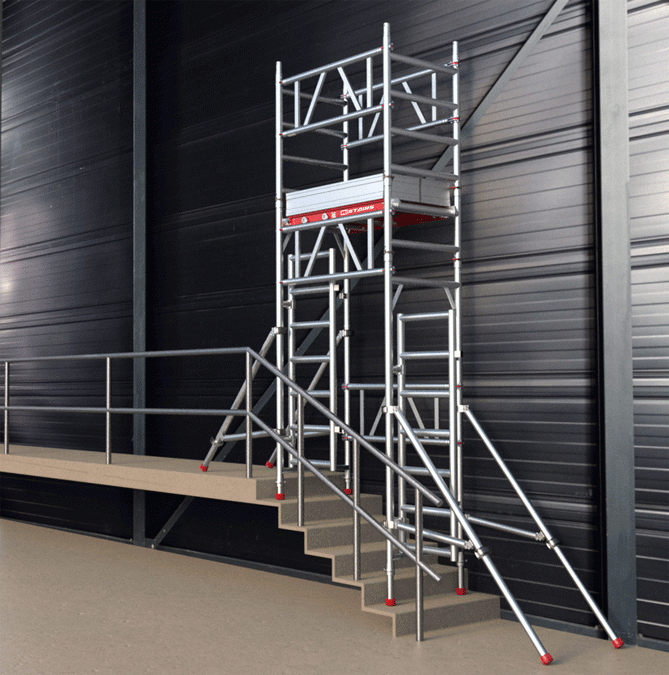
Corridor suspended ceilings are common in commercial refurbishments, hotels, and healthcare buildings. Standard tower widths don’t always fit, particularly in corridors under 1.2m wide or stairwell landings with restricted access.
Narrow scaffold tower hire provides a 0.7m deck width that passes through tight access points while still giving a stable working platform. For long corridor ceiling runs, this is the practical solution. You work along the length of the corridor, repositioning the tower without needing to remove it from the space entirely.
Stabilisers extend the base footprint, so check corridor width against stabiliser spread before booking. Most narrow towers need at least 1.4m clear width when stabilisers are deployed.
Best for: Corridor ceiling grids, stairwell landing ceilings, narrow commercial spaces, hotel and healthcare refurbishments.
AGR Tower: Best for Larger Commercial Installations

Open-plan office suspended ceilings are the most common commercial application. Large floor plates, consistent ceiling heights around 3-4m, and two-person installation crews make this the standard scenario for most ceiling contractors.
AGR tower hire suits this environment well. The Advanced Guardrail system keeps guardrails in place throughout assembly, improving safety when one crew member is on the platform while the other passes materials up. The larger double-width platform accommodates both operator and a supply of ceiling tiles, reducing trips up and down.
For long installation days across large floor plates, the AGR platform size makes a genuine difference to productivity. You carry more materials per platform load and reposition less frequently.
Best for: Open-plan offices, retail refurbishments, two-person installation crews, commercial ceiling grids at 3-5m heights.
High Clearance Tower: Best for Industrial and Warehouse Ceilings
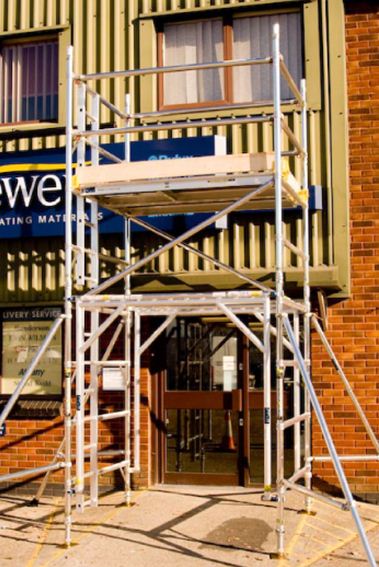
Warehouse suspended ceilings present a different challenge. Heights of 6m or more require taller towers, but the working environment also demands clearance underneath the tower for forklift movements, material handling, and other trades working simultaneously.
High clearance tower hire provides the elevated platform height needed for warehouse installations while maintaining clearance beneath the tower base. This matters on live industrial sites where work continues around the ceiling installation.
At these heights, two-person operation becomes essential for safety. One person on the platform, one passing materials up. Never work alone on a tower above 5m platform height.
Best for: Warehouse suspended ceilings, industrial units, tall commercial spaces, sites where clearance beneath the tower is required.
What Height Tower Do You Need?
The key figure is platform height, not working height. Platform height is where your feet stand. Working height adds roughly 2m for average reach above that. For suspended ceiling work, your platform needs to sit comfortably below the ceiling level so you can work without overreaching or crouching.
A simple rule: your platform height should equal the finished ceiling height minus 1.6-1.8m. This puts your hands at ceiling level with your arms slightly raised, which is the most efficient working position for grid fixing and tile placement.
| Ceiling Height | Platform Height Needed | Recommended Tower |
|---|---|---|
| 2.4-3m | 0.6-1.4m | Mi Tower or podium steps |
| 3-4.5m | 1.2-2.8m | Standard aluminium tower |
| 4.5-6m | 2.8-4.2m | Taller aluminium tower |
| 6m+ | 4m+ | High clearance specialist tower |
Always measure your actual ceiling height before booking. Suspended ceiling grid systems drop the finished ceiling below the structural slab, sometimes by 300-600mm. Measure from finished floor to structural ceiling and subtract your intended void depth. Check mobile tower scaffold maximum height regulations before specifying taller towers for warehouse installations
Key Features to Look for When Hiring
Not all towers suit suspended ceiling work equally. Look for these features when comparing options.
- Lockable castors allow repositioning without dismantling. This is non-negotiable for suspended ceiling work. Always lock castors before stepping onto the platform.
- Platform size matters when you’re carrying ceiling tiles up with you. Double-width platforms accommodate materials alongside the operator. Single-width platforms work for solo fitters but require more ground-level passes.
- Safe working load of 150kg minimum suits one operator with tools. Two-person platforms need 275kg SWL. Factor in tile weight if loading the platform.
- Guardrails on all four sides are essential. Suspended ceiling work has you looking up constantly. Full guardrail coverage prevents backward steps off the platform edge during tile placement.
- Lightweight aluminium construction protects finished flooring in commercial spaces and makes repositioning practical on a long installation day.
Understanding the types of scaffolds available helps narrow down the right configuration before you call your hire company.
Practical Tips for Working on Suspended Ceilings at Height
Lock castors before every step up. It sounds obvious but repositioning fatigue makes this easy to skip. An unlocked tower on a smooth commercial floor moves under bodyweight.
Work in bays. Complete each grid section before repositioning rather than partially fixing runners across a wide area. This keeps work quality consistent and reduces unnecessary tower moves.
Keep tiles on the platform, not carried up. Load two or three tiles at a time onto the platform deck. Carrying tiles up the tower ladder single-handed increases fall risk and damages tile edges.
Use the two-person system on AGR towers. One person fixes grid components from the platform while the other passes tiles, cuts components to length, and manages material supply from ground level. This division of labour significantly increases installation speed.
Never reach beyond the guardrail to extend your range. Reposition the tower instead. Overreaching is one of the leading causes of platform falls and takes seconds to avoid by moving the tower half a metre.
Check your ceiling height with a laser measure, not a tape. Suspended ceiling void depths vary across a floor plate due to structural beam depths and service runs. A laser measure gives you the actual finished ceiling height at multiple points, not just at the wall.
How Much Does Tower Hire Cost for Ceiling Installation Projects?
Tower hire costs for suspended ceiling work depend on tower type, hire duration, and delivery location. Standard aluminium towers for domestic ceiling heights start from £33-74 per week. Commercial towers at greater heights run £89-132 per week. Specialist towers including high clearance options carry premium rates.
Most suspended ceiling projects benefit from weekly hire rather than daily rates. A standard domestic basement conversion takes 2-4 days. Commercial open-plan offices typically run 1-2 weeks depending on floor plate size. Long-term hire discounts of 50-70% apply on hires exceeding three weeks, making extended commercial projects significantly more cost-effective.
Read the complete scaffold tower hire prices guide for a full breakdown of rates across tower types and hire durations.
Where to Hire Scaffold Towers for Ceiling Work
Lakeside Hire delivers scaffold towers nationwide with next-day service to all major UK cities. PASMA-trained coordinators help you specify the right tower for your ceiling height and space constraints before you book.
Next-day delivery is available to Manchester, Birmingham, Leeds, Liverpool, Bristol, Nottingham, and Leicester alongside nationwide coverage. Zero deposit required with penalty-free early returns on all hires.
Frequently Asked Questions
What height tower do I need for a standard suspended ceiling?
For a typical domestic suspended ceiling at 2.4m, a Mi Tower or podium steps with a platform height of 0.6-0.8m provides comfortable working position. Commercial ceilings at 3-4m need platform heights of 1.2-2.2m. Always measure your finished ceiling height and subtract 1.6-1.8m to calculate the platform height you need.
Can I reposition a scaffold tower without dismantling it?
Yes, provided the tower has lockable castors and you follow the correct procedure. Always ensure nobody is on the platform during repositioning, remove or secure any loose materials from the deck, unlock the castors, move the tower to the new position, and lock all castors before anyone steps up. Never ride the tower during repositioning.
How long should I hire a tower for a suspended ceiling project?
Domestic rooms typically take 1-2 days per room. A full basement conversion runs 3-5 days. Commercial open-plan offices depend on floor plate size but typically need 1-3 weeks for full ceiling grid and tile installation. Book for slightly longer than your estimate as ceiling work frequently uncovers additional tasks.
Conclusion
The right tower for suspended ceiling installation depends on three things: ceiling height, space constraints, and crew size. Solo fitters on standard domestic ceilings get the best results from Mi Tower hire. Tight spaces and corridors need narrow scaffold tower hire or the Room Mate. Commercial two-person installations work best from an AGR tower. Warehouse heights need specialist high clearance towers.
Get the specification right before you book. Lakeside Hire’s PASMA-trained team helps you confirm the right tower for your ceiling job. Call 01708 866566 or browse the full scaffold tower hire range online with next-day delivery nationwide.


