






Best Scaffold Towers to Hire for HVAC and Ductwork Installation
HVAC and ductwork installation places specific demands on access equipment that general-purpose towers don’t always meet. Ductwork sections are heavy, awkward, and require two-person lifts at ceiling height. You work in ceiling voids alongside electrical runs, sprinkler pipework, and cable trays. Floor plates in commercial buildings are large, requiring dozens of tower repositions across a working day. Getting the wrong tower means slower installation, compromised safety during heavy lifts, and lost time on projects where programme delays carry real financial consequences.
This guide covers the best scaffold towers to hire for HVAC and ductwork installation, what height to specify for different building types, and how to work efficiently across mechanical and ventilation installation programmes.
Why HVAC and Ductwork Installation Needs the Right Scaffold Tower
HVAC installation combines several access challenges that rarely appear together on other trade jobs. Heavy rectangular ductwork sections require two engineers lifting simultaneously from platform height, which means your tower needs to safely support two people plus tools and components at the same time.
Working in ceiling voids alongside other building services creates spatial constraints. Electrical containment, sprinkler pipework, and data cable trays compete for the same ceiling space. Tower positioning needs to allow working within the void without disrupting adjacent services or blocking access routes for other trades working simultaneously.
Commercial floor plates are large. A typical open-plan office HVAC installation involves running ductwork across thousands of square metres, with the tower repositioning every few metres along each run. Speed of repositioning directly affects programme delivery. Understanding the types of scaffolds available helps identify which configurations suit the mechanical installation environment before committing to a hire.
Live commercial environments add further constraints. Many HVAC installations happen in occupied buildings during planned maintenance windows or phased fit-out programmes. Tower choice affects how quickly your team sets up and packs down at the start and end of each access window.
Best Scaffold Towers to Hire for HVAC and Ductwork
The right scaffold tower for HVAC work depends on the installation type, the building, and crew size. Commercial ductwork runs need a stable double-width platform for two-person lifts, while domestic jobs suit a fast, solo-operated tower. The five options below cover the full range, from solo MVHR installs to two-person commercial duct lifts.
| Tower | Ceiling Height Suited | Crew Size | SWL | Best For |
|---|---|---|---|---|
| AGR Tower | 3-5m | Two-person | 275kg | Open-plan office and retail ductwork runs, two-person duct lifts |
| High Clearance Tower | 6-10m+ | Two-person | 275kg | Warehouse and industrial HVAC, clearance for forklifts and materials handling |
| Mi Tower | Up to 4m | Solo | 150kg | Domestic HVAC, MVHR systems, small commercial units |
| Narrow Scaffold Tower | Up to 4m | Solo | 150kg | Plant rooms, basement mechanical spaces, service corridors |
| Lift Shaft Tower | Variable / multi-floor | Solo or two-person | Priced on application | Vertical duct riser installation, commissioning in service cores |
AGR Tower: Best for Commercial Ductwork Runs

Commercial office and retail HVAC installation involves running rectangular ductwork sections across large open floor plates at heights of 3-5m. Two engineers work together on each section lift. The AGR tower is the right platform for this environment.
AGR tower hire provides a double-width platform that accommodates two engineers working side by side during ductwork lifts. This is the critical difference between AGR and single-width alternatives for mechanical work. A ductwork section weighing 20-30kg requires both engineers to lift simultaneously from the same platform level. Single-width platforms don’t provide safe working space for coordinated two-person lifts at height.
The double-width deck also holds ductwork sections horizontally while engineers connect joints, apply sealant, and fix hangers to the structural soffit. Staging a duct section on the platform during connection work is significantly safer than holding it overhead throughout the fixing process.
The Advanced Guardrail system keeps guardrails in place throughout assembly, providing passive protection for both engineers during the physically demanding process of manoeuvring heavy ductwork sections above head height.
Best for: Open-plan office HVAC installation, retail unit ventilation runs, two-person mechanical engineering crews working at commercial ceiling heights of 3-5m.
High Clearance Tower: Best for Warehouse and Industrial HVAC
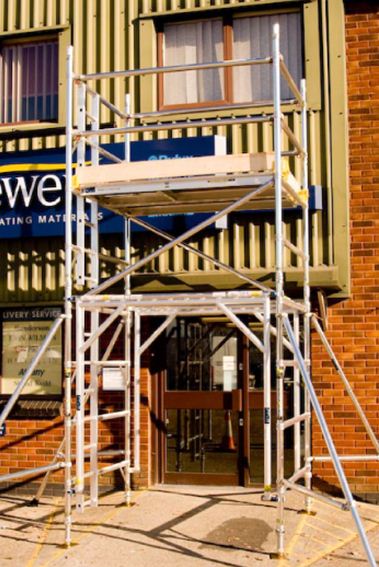
Warehouse and industrial HVAC involves ductwork at heights of 6-10m or more, often in environments where forklift trucks, pallet handling equipment, and materials delivery continue operating during installation. Standard tower bases at these heights create obstruction risks in busy warehouse environments.
High clearance tower hire provides the elevated platform height required for industrial ductwork while maintaining clearance beneath the tower base for materials handling equipment to pass. On live manufacturing sites and distribution centres where operations continue during HVAC installation, this clearance eliminates the constant need to relocate the tower every time a forklift needs to pass.
At heights above 5m, two-person tower operation becomes a safety requirement. One engineer works from the platform managing ductwork installation while a second remains at ground level managing materials supply, monitoring stability, and maintaining communication. Industrial ductwork sections at these heights are significantly heavier than commercial equivalents, making ground-level material management essential.
Outrigger stability is critical on warehouse floors that may have surface irregularities from heavy vehicle traffic. Check all outriggers are fully deployed and the platform is confirmed level before any engineer ascends.
Best for: Warehouse HVAC installation, industrial ventilation systems, manufacturing facility ductwork, any environment where materials handling equipment operates in the same space during installation.
Mi Tower: Best for Domestic and Small Commercial HVAC

Domestic HVAC installation and small commercial units with ceiling heights up to 4m suit a different approach. A single engineer working along a ductwork run in a domestic property or small retail unit needs fast solo repositioning, not a two-person platform configuration.
Mi Tower hire provides the right balance for this environment. A single engineer builds it without assistance using a clip-frame system requiring no tools. Lockable castors allow rolling repositioning along ductwork runs without dismantling between each bracket position. The compact footprint works within domestic rooms and small commercial units without obstructing doorways or blocking other trades.
For domestic MVHR (mechanical ventilation with heat recovery) installation, the Mi Tower suits the typical working height and solo installation approach. Engineers working along short ductwork runs in domestic properties reposition the tower frequently. The Mi Tower’s quick move capability means this repositioning takes seconds rather than minutes.
The platform provides sufficient deck space for tools, fixings, and sealant materials needed for each connection point. For longer ductwork sections that require a second person to manage one end during installation, the Mi Tower’s platform size limits two-person use. In these cases, two Mi Towers positioned at each end of the section provide a better solution than attempting two-person use on a single compact platform.
Best for: Domestic HVAC installation, MVHR systems in residential properties, small commercial units, solo HVAC engineers on ceiling heights up to 4m.
Narrow Scaffold Tower: Best for Plant Rooms and Service Corridors
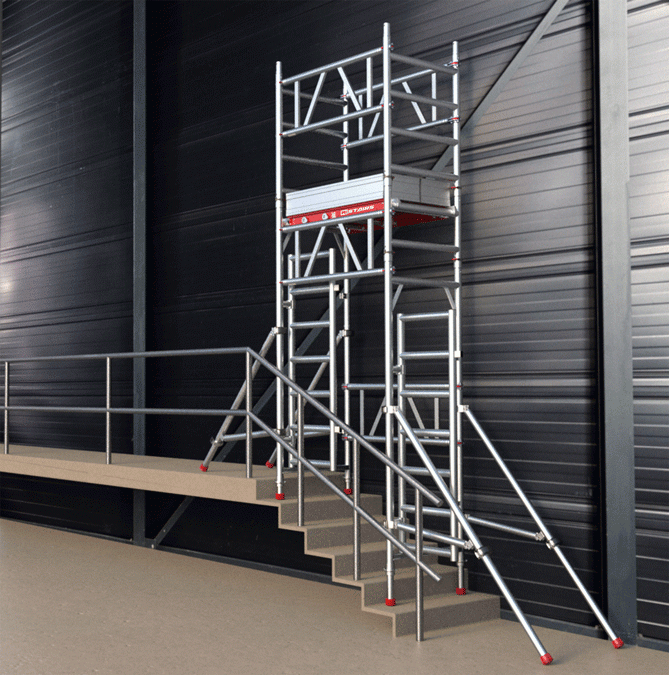
Plant rooms, service corridors, and basement mechanical spaces are among the most congested working environments in any building. Pipework, electrical distribution boards, pumps, and existing plant leave minimal clear floor space. Standard tower configurations simply don’t fit.
Narrow scaffold tower hire with a 0.7m deck width provides access in spaces where standard towers cannot enter. Plant room HVAC maintenance, ductwork connections at riser entry points, and air handling unit access in tight mechanical rooms all benefit from the narrow configuration.
The narrow tower also suits service corridor ductwork runs in commercial buildings. Back-of-house service routes in hotels, hospitals, and retail developments often run through corridors under 1.5m wide. These routes carry significant ductwork runs serving building zones, and maintenance access requires working at height within the corridor width constraints.
Check stabiliser deployment width against your specific plant room or corridor dimensions before booking. Stabilisers extend the base footprint beyond the 0.7m platform width. Confirm clear floor space at the point of use accommodates full outrigger deployment before the tower arrives on site.
Best for: Plant rooms, basement mechanical spaces, service corridors, riser connection points, maintenance access to existing HVAC systems in congested mechanical environments.
Lift Shaft Tower: Best for Vertical Ductwork Runs

Vertical ductwork risers present a working at height challenge that horizontal run towers don’t address. Service cores in commercial buildings carry vertical duct risers from plant rooms to individual floor distribution points. Access for installation and commissioning work on these vertical runs requires towers specifically designed for confined vertical spaces.
Lift shaft tower hire provides the access configuration for vertical ductwork work in service cores and riser shafts. The tower is designed for confined vertical environments where standard outrigger deployment isn’t possible. This configuration suits new-build commercial projects where vertical risers are installed before the building envelope closes around them, as well as refurbishment work accessing existing risers through access panels.
Commissioning work on vertical ductwork runs, including damper adjustment, balancing, and air flow measurement at each branch connection point, requires precise platform positioning at multiple heights within the riser. The lift shaft tower configuration handles the height progression that commissioning work demands.
Best for: Vertical duct riser installation in service cores, commissioning work at branch connection points, refurbishment access to existing vertical ductwork through riser access panels.
What Height Tower Do You Need for HVAC Work?
HVAC ductwork sits in the ceiling void above the suspended ceiling grid, not at finished ceiling height. Your platform needs to reach into the structural void comfortably, not just to the suspended ceiling level. This distinction matters when specifying platform height.
Measure from finished floor to structural soffit, not to the suspended ceiling tile. In a typical commercial office with a 2.7m suspended ceiling, the structural soffit may sit at 3.5-4m. Your platform needs to reach the structural level where ductwork brackets and hangers fix to the slab.
| Building Type | Structural Ceiling Height | Platform Height Needed |
|---|---|---|
| Domestic property | 2.4-2.7m | 0.6-1m |
| Commercial office | 3.5-4.5m | 1.5-2.5m |
| Retail unit | 3-5m | 1.2-3m |
| Industrial/warehouse | 6-10m+ | 4-8m |
| Plant room/basement | Variable | Adjustable legs essential |
Always measure structural ceiling height at multiple points across the floor plate. Beam depths, service risers, and structural variations mean void depth changes across large buildings. Check what size scaffold tower you need for a full guide to platform height selection. Review mobile tower scaffold maximum height regulations before specifying towers for tall industrial and warehouse environments.
Key Features to Look for When Hiring for HVAC Work
High safe working load is the primary consideration for mechanical installation. Ductwork sections, fittings, and tools accumulate quickly on the platform. A double-width AGR platform needs 275kg SWL minimum for two-engineer use with components. Confirm SWL against your expected platform load before booking.
Double-width platform is essential for two-person duct lifts. Single-width platforms don’t provide safe working space for coordinated lifting of heavy ductwork sections at height. Specify double-width for all commercial ductwork installation work.
Lockable castors rated for smooth commercial floors matter on the polished concrete and epoxy resin floors common in warehouses and commercial buildings. Soft rubber castors provide better grip than hard wheels on these surfaces.
GRP non-conductive towers suit environments where electrical services run alongside ductwork in ceiling voids. Where engineers work in close proximity to unprotected electrical containment, GRP scaffold tower hire provides an additional layer of protection against accidental contact with live services.
Outrigger stability on uneven warehouse floors requires checking before ascending. Fully deploy all outriggers and confirm platform level before any engineer steps up, particularly in industrial environments where floor surfaces may have irregularities from heavy vehicle use.
Practical Tips for HVAC and Ductwork Installation at Height
Pre-stage ductwork sections on the floor before lifting. Lay out the full duct run on the floor below the installation line before the tower goes up. Pre-assemble joints and apply sealant at floor level where possible. Reduce the number of connections made at height by maximising ground-level assembly.
Coordinate tower positions with electrical and ceiling trades. On multi-trade fit-out programmes, agree a zone-by-zone working sequence at the daily site briefing. Mechanical and electrical trades working in the same ceiling zone simultaneously create tower collision risks and slow both trades down.
Use a two-person lift technique for all sections above 15kg. One engineer guides the section into position while the second manages the weight during the lift. Never attempt solo lifts of heavy ductwork sections from platform height.
Plan the ductwork run sequence to minimise tower moves. Work from the furthest point back toward the plant room rather than starting at the plant and working outward. This keeps the completed run behind the working position and prevents the tower from having to navigate around installed sections.
Check ceiling void clearance before specifying platform height. Beams, structural ties, and existing services in the void reduce the clear working height available. A platform that puts an engineer’s head at structural soffit level with no void clearance makes overhead fixing work impossible. Allow 400-500mm of clear working space above the platform for overhead installation.
Confirm access route dimensions for tower delivery through the building. Commercial buildings with narrow service corridors, low car park access ramps, and restricted goods lifts can prevent tower sections reaching the installation floor. Measure every access restriction between the delivery point and the working floor before the hire company arrives.
How Much Does Tower Hire Cost for HVAC Projects?
Tower hire costs for HVAC installation depend on building type, structural ceiling height, and project duration. Standard aluminium towers for commercial office HVAC at 3-5m structural heights run £89-132 per week. Specialist high clearance towers for warehouse environments carry premium rates. Lift shaft tower configurations are priced on application.
Commercial HVAC projects typically run 2-8 weeks depending on building size and scope. Weekly hire rates provide significantly better value than daily rates for projects of this duration. Long-term hire discounts of 50-70% apply on hires exceeding three weeks, making extended mechanical installation programmes considerably more cost-effective.
Large floor plate installations benefit from hiring multiple towers simultaneously, allowing mechanical and electrical engineers to work across different zones concurrently without sharing equipment. Discuss multi-tower requirements with your hire company when booking to confirm availability across your full programme.
Read the complete scaffold tower hire prices guide for a full breakdown of rates across tower types and hire durations.
Where to Hire Scaffold Towers for HVAC Work
Lakeside Hire delivers scaffold towers nationwide with next-day service to all major UK cities. PASMA-trained coordinators help specify the right tower configuration for your building type, structural ceiling height, and crew requirements before you book.
Next-day delivery reaches Manchester, Birmingham, Leeds, Liverpool, Bristol, Nottingham, and Leicester alongside full nationwide coverage. Zero deposit required with penalty-free early returns on all hires.
Frequently Asked Questions
Do I need a PASMA-trained operator for HVAC tower use?
For commercial work, the Work at Height Regulations 2005 require that all working at height tasks are carried out by competent persons. PASMA certification is the industry-standard method for demonstrating competence with mobile access towers. For domestic HVAC installation on private property, PASMA training is strongly recommended but not a legal requirement.
Can I use a scaffold tower to support ductwork during installation?
No. Scaffold towers are access platforms for people and hand tools, not structural supports for building components. Never use a tower platform as a temporary support for ductwork sections during installation. Use proprietary ductwork support systems, temporary hangers, or additional personnel to manage ductwork weight during the fixing process.
How many towers should I hire for a large commercial HVAC installation?
Most large commercial HVAC programmes benefit from two to four towers running simultaneously across different zones. This allows mechanical engineers to work along one ductwork run while electrical trades work in an adjacent zone without sharing access equipment. Discuss your floor plate size, trade programme, and zone sequencing with your hire company to confirm the right number of towers for your project.
Conclusion
The right tower for HVAC and ductwork installation depends on building type, structural ceiling height, crew size, and working environment. Commercial open-plan ductwork runs need AGR tower hire for safe two-person lifts. Warehouse and industrial environments need high clearance towers for materials handling clearance beneath. Domestic and small commercial HVAC suits Mi Tower hire for fast solo repositioning. Plant rooms and service corridors need narrow scaffold tower hire. Vertical riser work requires lift shaft tower hire.
Get the specification right before you book. Lakeside Hire’s PASMA-trained team confirms the right tower configuration for your HVAC programme before delivery. Call 01708 866566 or browse the full scaffold tower hire range with next-day delivery nationwide.


