





What Size Scaffold Tower Do I Need? Find the Right Height for Your Project
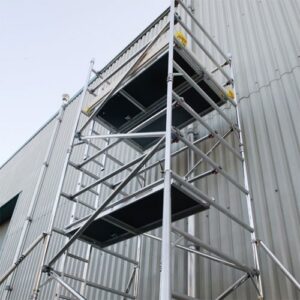
The scaffold tower you need depends on where you’re working. For most two-story houses, a 6m or 7m working height tower gets you to the gutters and eaves safely. But your exact requirements depend on the job, the ground conditions, and how high you need to reach.
Getting the right size means measuring your work area first, then matching it to the three height measurements that matter: platform height, tower height, and working height. Here’s how to figure out exactly what you need.
Key Takeaways
• Add about 2m to your scaffold platform height to determine your total working height and ensure you have enough reach for your project.
• Scaffold tower height should never exceed 4 times the smallest base dimension to ensure stability and safety.
• Scaffold towers support different weights. For light work, 150kg capacity works fine, but heavier tasks need towers with higher load ratings.
• Smaller projects need shorter scaffold towers (3m-5m working height), while large construction tasks or high-rise work require taller towers (8m-10m).
• Always check that your scaffold tower meets BS EN 1004 safety standards to ensure a safe working environment.
• Many scaffold towers have adjustable platform heights, giving you flexibility to customize your setup for different levels of the project.
The Three Heights That Determine Your Scaffold Tower Size
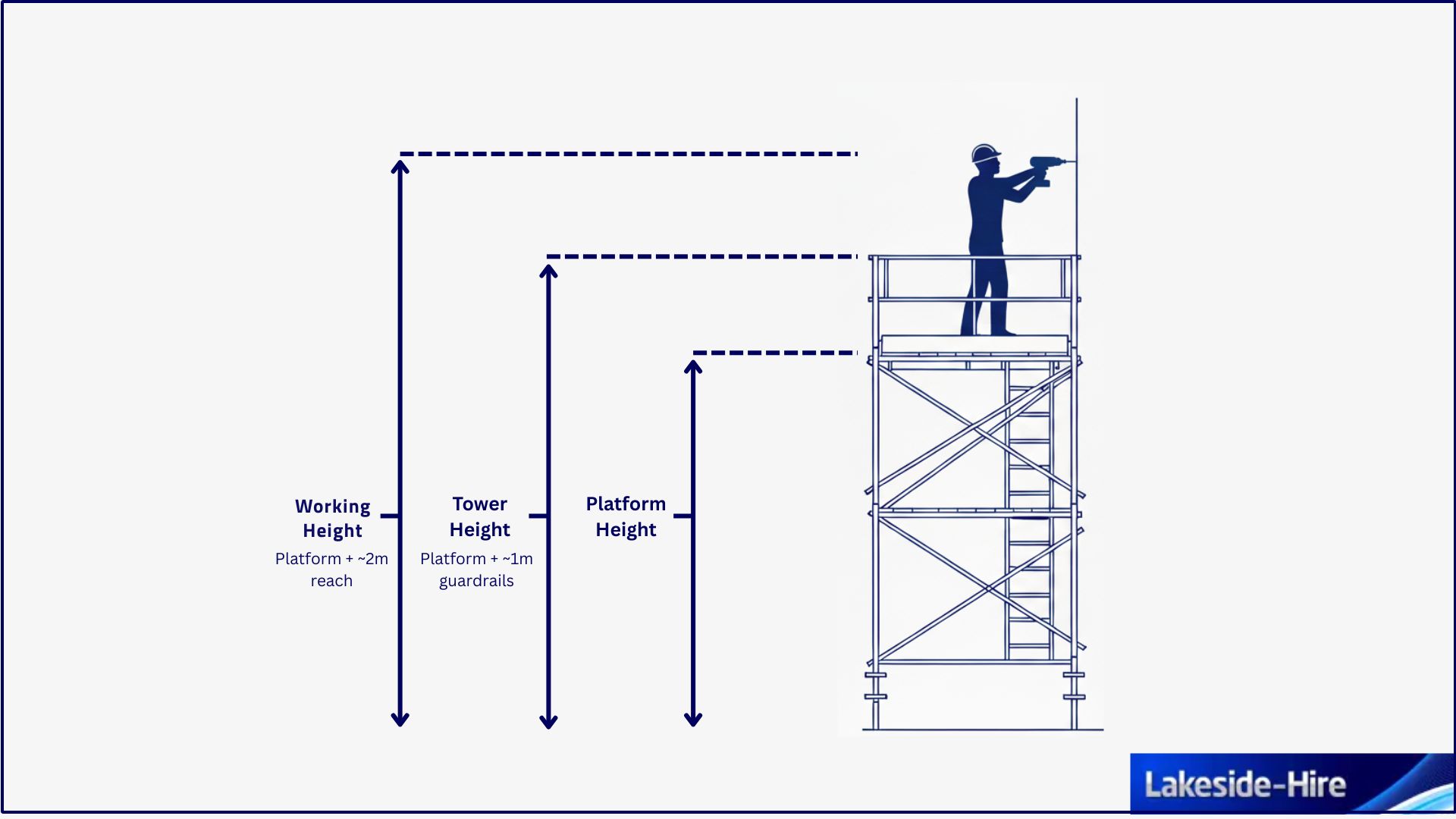
Every scaffold tower has three different height measurements. You need to know all three to pick the right size.
• Platform height is where your feet stand. This is the actual working surface of the tower. If you need to see into your gutters while cleaning them, your platform needs to be at or just above gutter level.
• The tower height sits about 1m above the platform. This accounts for the guardrails that keep you safe while working. You need to know this measurement if you’re working indoors or have overhead obstacles like tree branches or power lines.
• Working height is how far you can reach with your arms extended above your head. Most manufacturers calculate this as 2m above the platform height. This is the measurement you compare against when figuring out how high you need to work.
How To Measure Your Work Area To Get The Right Tower Height
Grab a tape measure and measure the exact spot where you’ll be working. Don’t guess and don’t assume your house is standard height. Brick sizes, ceiling heights, and roof pitches all vary.
Measure from the ground to your work area. If you’re cleaning gutters, measure to the bottom of the gutter. If you’re painting a wall, measure to the highest point you need to reach. Add any extra reach you’ll need from your tools.
Write down your measurement and compare it against the working height of different towers. The working height should meet or exceed your measured height by at least 0.5m for comfortable, safe work.
Tower Height Comparison: Which Size Fits Your Project
| Working Height | Platform Height | Typical Use | Best For |
| 2m | 0.5m | Light indoor work | Changing bulbs, low ceiling repairs |
| 3m | 1m | Standard ceiling work | Interior painting, ceiling fixtures |
| 4m | 2m | Single-story exterior | Low eaves, bungalow maintenance |
| 5m | 3m | Higher single-story | Bungalow gutters, fascia work |
| 6m | 4m | Two-story lower sections | House gutters (lower access) |
| 7m | 5m | Two-story full access | House gutters (comfortable reach) |
| 8m | 6m | Three-story buildings | Commercial work, tall properties |
Common Scenarios And Which Tower Sizes Work Best
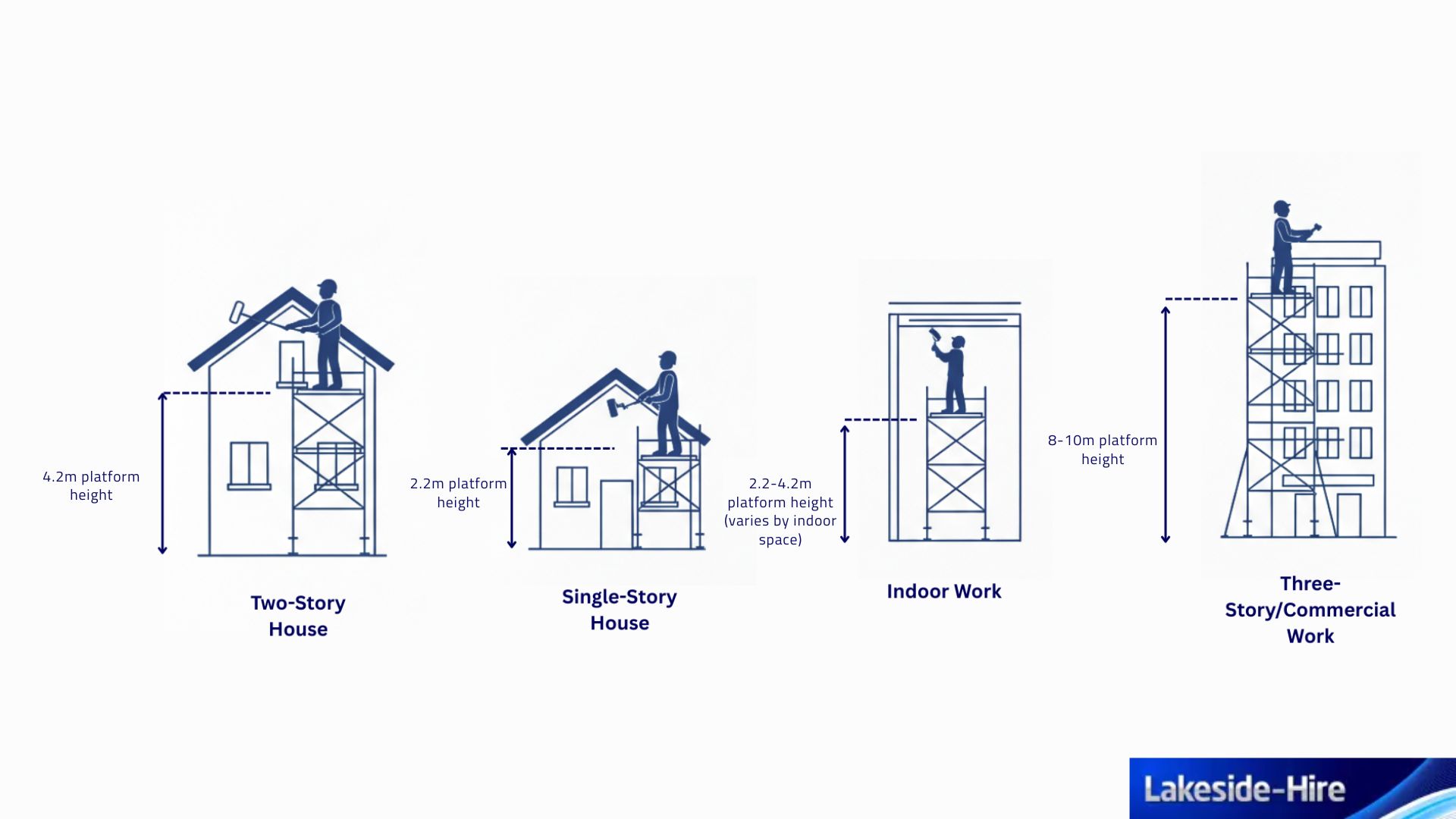
For cleaning gutters on a standard two-story house, you’ll need a tower with a 4.2m platform height, which gives you comfortable access to gutters that sit around 5m to 6m high.
Painting the exterior of a single-story house needs a 2.2m plaform height tower. You can reach the eaves and fascia boards without stretching dangerously.
Indoor work, such as painting ceilings or installing light fixtures, can require around 2.2m to 4.2m platform height, depending on the space. A living room and a school hall, for example, will need very different heights. Always check your platform height against the ceiling height before ordering and leave enough clearance for the guardrails. The same indoor height range covers more than painting and light fixtures. Scaffold tower hire for plastering typically calls for the same 3-4m platform height as ceiling painting, since you’re working at the same surface before decoration goes on. Scaffold tower hire for HVAC ductwork installation and servicing sits in this range too, though you may need to measure to the underside of the ducting rather than the finished ceiling line if it’s being fitted below an existing soffit. Scaffold tower hire for suspended ceiling work is the one exception worth flagging: measure to the structural ceiling above where the grid will hang, not to where the finished suspended ceiling will eventually sit, or you’ll end up a platform height short once the grid goes in.
Working on three-story buildings or commercial properties? You’re looking at towers with 8m, 9m, or 10m platform heights. At these heights, you need to check ground conditions carefully and consider using stabilizers. That’s the right call for tall commercial buildings, but not every commercial job is about height. Scaffold tower hire for commercial decorating across an office or retail unit often stays within the same 4-7m range as domestic work — the difference is floor area, which usually means running several towers at once or working a fixed overnight window rather than sizing up. Scaffold tower hire for shop fitting and retail fit-outs add a further constraint: the tower needs to suit ceiling tiles, signage, and lighting as well as decorating, often against a fixed opening date, so sizing the tower correctly the first time matters more than on a job where you can swap equipment mid-project.
How to Choose The Right Base Width For Your Tower
The width of your scaffold tower affects both stability and working space. Standard towers are typically 0.85m wide, which works for most single-person tasks.
For projects requiring more tools, materials, or multiple workers, wider platforms around 1.4m to 1.8m give you extra room. Wider bases also improve stability, especially on taller towers.
The base width becomes critical as tower height increases. The general safety rule is that tower height should never exceed 4 times the smallest base dimension. So a 0.85m wide tower maxes out safely at around 3.4m tower height without outriggers or stabilizers.
What To Check About Your Ground Surface Before Sizing Your Tower
Your ground surface affects which tower you can safely use. Flat, solid ground like concrete or paving gives you the most options. You can use standard towers with base plates.
Uneven ground like driveways with a slope or patchy lawns need towers with adjustable legs. These let you level the platform even when the ground isn’t flat. Check the maximum height adjustment range before ordering.
Soft ground like grass or soil requires base plates or boards to spread the load. The weight of a loaded tower can sink into soft surfaces and create a dangerous lean.
Working on stairs? You need a stairwell tower with adjustable legs on each corner. Standard towers don’t work safely on steps.
Scaffold Tower Types And Their Size Ranges For Different Projects
Choosing the right scaffold tower depends on your project’s specific requirements. Different tower designs solve different problems, from tight indoor spaces to uneven outdoor terrain. Here’s how each type matches different height and size requirements.
Standard Aluminium Scaffold Tower (Working Height: 2m – 12m)
Standard scaffold towers are the most versatile option for general work. They come in working heights from 2m up to 12m, making them suitable for everything from low ceiling work to three-story buildings. These towers are lightweight, quick to assemble, and work for both indoor and outdoor use.
Best for general tasks like home improvement, minor repairs, and light maintenance. The range of heights means you can find the exact size for your specific job without paying for excessive tower height.
Mi Tower Scaffold Tower (Working Height: 4m – 6m)
The Mi Tower is compact and designed for portability, with working heights ranging from 4m to 6m. This size range handles most single-story and lower two-story work. The easy assembly design makes it popular for jobs requiring regular repositioning without excessive height.
Best for small to medium projects where portability matters, like interior ceiling work, wall repairs, or outdoor tasks on bungalows and single-story buildings.
Cantilever Scaffold Tower (Working Height: 6m – 10m)
Cantilever towers feature extended platforms and typically range from 6m to 10m working height. These heights cover most two-story and three-story residential work where you need to reach over obstacles. The extended platform adds reach without increasing tower height.
Best for tasks requiring work around or over obstacles at medium to high levels, including window cleaning on buildings with extensions, repairs near conservatories at 6-8m height, or roof access on two-story properties.
Room Mate Folding Scaffold Tower (Working Height: 4m – 6m)
The Room Mate tower has a smaller footprint with working heights from 4m to 6m. The compact base (typically 0.7m x 1.8m) fits through standard doorways while still providing sufficient height for most indoor work and single-story exterior access.
Best for smaller indoor projects requiring 4-6m reach in confined spaces, home repairs in tight rooms, or any work where standard tower dimensions won’t fit but you still need proper working height.
GRP Scaffold Tower (Working Height: 6m – 10m)
GRP towers are made from fibreglass and typically range from 6m to 10m working height. This height range covers most electrical work on residential and light commercial buildings. The non-conductive material is essential when working at these heights near power lines or electrical installations.
Best for industrial projects, electrical maintenance at 6-10m height, or any situation where you need medium to high reach near electrical hazards where metal towers would be dangerous.
Stairmax Tower (Working Height: 3m – 7m)
The Stairmax tower is specifically designed for stairwells with working heights from 3m to 7m. The adjustable frame sections let you configure the exact height needed for staircase work, whether you’re painting a stairwell or installing fixtures at different levels.
Best for stairwell projects requiring variable working heights between 3-7m, where you need a stable platform that adjusts to each stair level as you work your way up.
High Clearance Tower (Working Height: 4m – 8m)
High clearance towers provide extra space underneath with working heights from 4m to 8m. The first platform sits higher than standard towers, giving you clearance over obstacles while still reaching your target working height.
Best for projects requiring 4-8m working height where you need to work over conservatories, vehicles, or ground-level obstacles that would interfere with a standard tower base.
What Are The Load Capacity Requirements For Your Work
Load capacity refers to the maximum weight your scaffold tower can safely hold, including workers, tools, and materials. Getting this right prevents dangerous overloading.
Most domestic towers handle 150kg per platform, which covers one person plus standard tools. This works fine for painting, light repairs, or gutter cleaning.
Heavier work involving multiple workers, bulky equipment, or stored materials needs towers rated for 250kg or more. Construction projects, roofing work with tiles, or industrial maintenance typically fall into this category.
Always check the load rating before choosing your tower. If you’re close to the limit, go for the higher capacity option. Overloading causes instability and creates serious safety risks.
Safety Requirements You Can’t Ignore When Choosing Tower Size
Towers above 5m working height need stabilizers or outriggers. These widen the base and prevent tipping. The higher you go, the more critical this becomes.
All scaffold towers must comply with BS EN 1004 safety standards to ensure safe working conditions. Check for certification before hiring or buying any tower.
Always build your tower on level ground. Even a small difference at the base creates a dangerous pitch at the top. Use adjustable legs to fine-tune the level.
Wind affects tall towers. If you’re working outdoors above 6m, check the weather forecast. Strong winds make towers unstable and unsafe.
Regular safety inspections are required, especially after moving the tower or adverse weather. Check all connections, guardrails, and platform security before each use.
Project Type Determines Your Tower Size Needs
Small detailed work, like indoor painting, ceiling repairs, or light maintenance, needs smaller towers with 4m to 6m working heights. These tasks don’t require large platforms or heavy equipment.
Medium projects such as exterior house painting, window replacement, or gutter installation work best with 6m to 7m working height towers. You get comfortable access without excessive tower height.
Large construction projects, high-rise maintenance, or commercial roofing demands towers with 8m to 10m working heights. These jobs need larger platforms, higher load capacities, and additional safety features like extended outriggers.
Match your tower to your project scope. Using a tower that’s too small forces dangerous reaching and multiple repositions. Using one that’s too large wastes money and creates unnecessary setup complexity.
Get the right size the first time by measuring your work area and comparing it to working height specifications. If you’re between sizes, go taller. You can adjust the platform down on most towers, but you can’t make a short tower reach higher.
Frequently Asked Questions
What height scaffold tower do I need?
The height you need depends on your work area measurement. Measure from the ground to where you’re working, then choose a tower with a working height that meets or exceeds this by at least 0.5m. For most two-story house gutters, a 6m to 7m working height tower works well. For single-story exterior work, 4m to 5m is usually sufficient.
What is the 4 to 1 rule for scaffolding?
The 4 to 1 rule means tower height should never exceed 4 times the smallest base dimension. For example, a tower with a 0.85m base width can safely reach 3.4m tower height without outriggers. Go taller than this and you need stabilizers or outriggers to widen the base and maintain stability. This rule prevents tipping and keeps the tower safe during use.
What is a 3T scaffold tower?
A 3T scaffold tower follows the “Through The Trapdoor” assembly method, which is the safest way to build mobile towers. You climb up through trapdoors in each platform level rather than climbing up the outside. This keeps you protected by guardrails during assembly and meets Health and Safety Executive recommendations. Most modern scaffold towers are 3T compliant.
Can I adjust the height of my scaffold tower after setup?
Yes, most scaffold towers let you adjust the platform height by moving it to different ladder rungs. This gives you flexibility for working at various levels without rebuilding the entire tower. Make sure the platform and guardrails are securely locked at the new height before using it. You can also add or remove frame sections to change the overall tower height.
Do I need stabilizers for my scaffold tower?
You need stabilizers or outriggers for any tower with a working height above 5m. These widen the base and prevent tipping, especially on taller towers where the center of gravity sits higher. Even on shorter towers, stabilizers add extra security if you’re working on uneven ground or in windy conditions. Check your tower’s specifications for stabilizer requirements.


